Teachers: How have you used this resource? Do you have ideas on how other teachers could present, adapt, or build upon it? I’d love to hear your thoughts! Your feedback is invaluable in helping me improve this free resource and making it even more beneficial for learners around the world. Please Click here to enter your comments.
A mathematical investigation is quite different to other mathematical activities. The best investigations are open ended and allow students to choose the way they work and how they record their findings. It is one of the few occasions when 'going off on a tangent' is not only acceptable but actively encouraged (within reason).
Students may ask for 'the answers' but this supposes that the activity is
closed. Investigations can always be extended by varying the initial
instructions or asking the question 'what if...?'. Sometimes students point out
that the instructions are ambiguous and can be interpreted in different ways.
This is fine and the students are encouraged to explain how they interpreted the
instructions in their report.
Some students may benefit from a writing frame when producing the reports
of their investigations. Teachers may suggest sections or headings such as
Introduction, Interpretation, Research, Working and Conclusion or something
similar.
Here are some other activities you may be interested in:
Featured ActivityNine Digits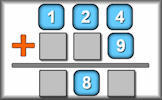 Arrange the given digits one to nine to make three numbers such that two of them add up to the third. This is a great puzzle for practicing standard pen and paper methods of three digit number addition and subtraction. |
SuggestedSieve of Eratosthenes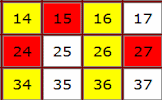 A self checking, interactive version of the Sieve of Eratosthenes method of finding prime numbers. |
Have you seen?Not Too Close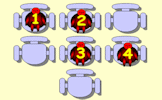 The students numbered 1 to 8 should sit on the chairs so that no two consecutively numbered students sit next to each other. So far this activity has been accessed 53375 times and 642 Transum Trophies have been awarded for completing it. |
Teacher's notes for this investigation and solutions to Transum puzzles, exercises and activities are available when you are signed in to your Transum subscription account. If you do not yet have an account and you are a teacher, tutor or parent you can apply for one by completing the form on the Sign Up page.
A Transum subscription also gives you access to the 'Class Admin' student management system, downloadable worksheets, many more teaching resources and opens up ad-free access to the Transum website for you and your pupils.